

Why Long-Tailed Macaques Might Be the Most Misunderstood Primates in the World


If you search long-tailed macaques online, you’ll probably see the same words coming up again and again — aggressive, thieves, dangerous monkeys.
And to be fair… sometimes they absolutely can be.
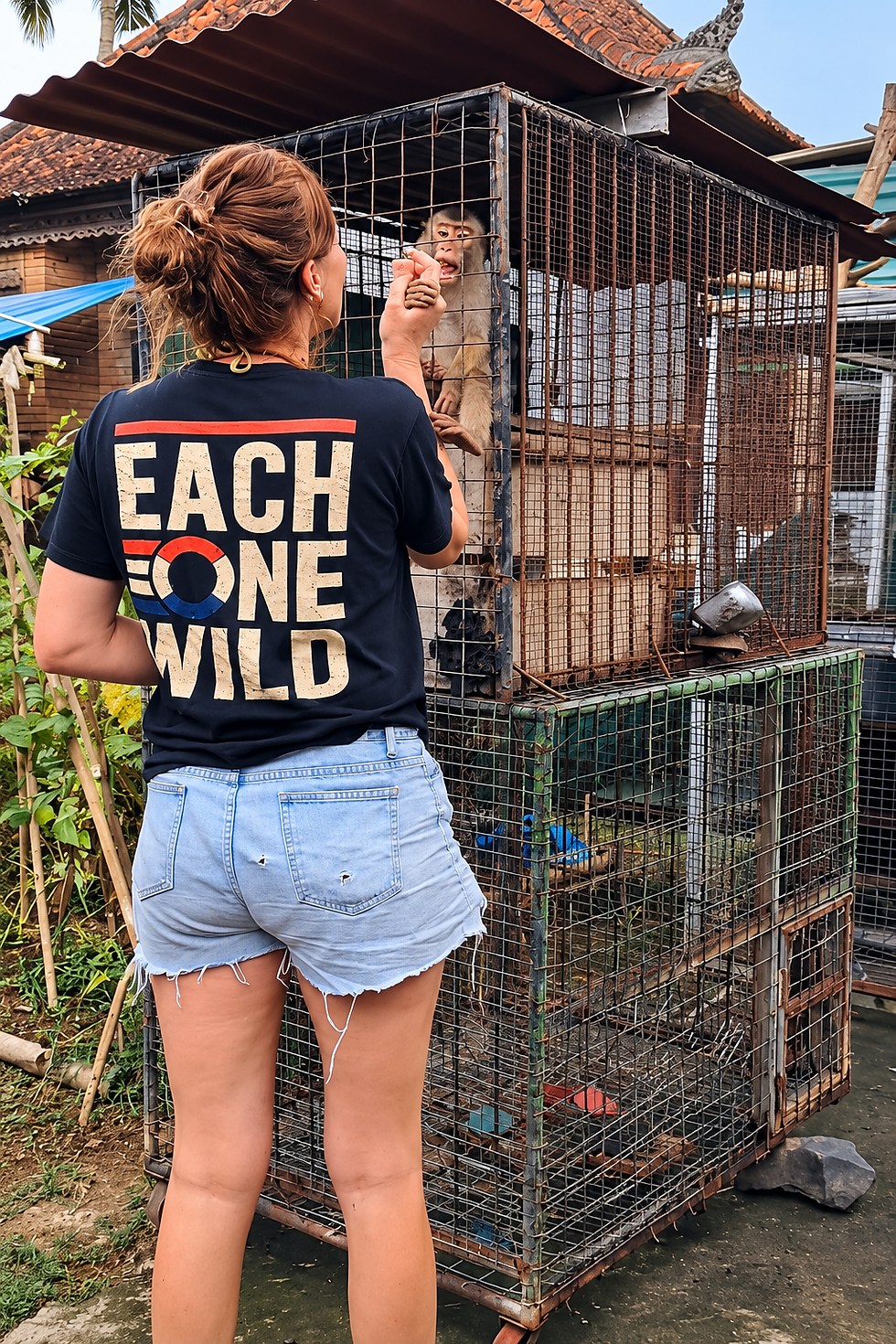
But after spending time working with them in Bali, I’ve come to believe that long-tailed macaques might actually be one of the most misunderstood primates on the planet.
Like most things in nature, the reality is far more complicated.
Life Alongside Humans
Long-tailed macaques (also known as crab-eating macaques) are incredibly intelligent primates that live across large parts of Southeast Asia. In places like Bali, they’ve learned to survive alongside humans in temples, forests and villages.
The problem is that when animals and humans share the same space, conflict is almost inevitable.
Macaques are opportunistic. They learn quickly that humans carry food, phones, glasses and all sorts of interesting things to steal. Anyone who has visited Bali has probably seen the famous temple monkeys happily running off with someone’s sunglasses.
From the outside it can look funny.
But it’s actually a sign of something deeper — these monkeys have had to adapt to survive in environments that are changing rapidly around them.
Not Villains… Just Survivors
One of the things that surprised me most when I first started spending time around macaques was just how complex their social lives are.
They live in large family groups with strong relationships, strict hierarchies and surprisingly emotional bonds. Mothers are fiercely protective of their babies. Younger monkeys play constantly. Older males act as guardians of the group.
They argue, they reconcile, they groom each other, they form alliances.
In many ways, watching a macaque troop feels a little like watching a very chaotic extended family.
Yes, they can be aggressive. But that aggression usually comes from fear, competition, or simply the pressures of living in crowded environments where humans and wildlife are constantly crossing paths.
A Difficult Reality
Sadly, long-tailed macaques are also one of the primate species that receives very little sympathy from the world.
Because they are relatively common in some areas, people often assume they are doing fine. But in many parts of Southeast Asia they face serious threats — habitat loss, the illegal pet trade, and sometimes direct persecution.
In Indonesia especially, protection for macaques is extremely limited. That means rescue centres and small conservation groups often end up stepping in when animals are injured, orphaned or kept in terrible conditions.
It’s difficult work, and it can be heartbreaking at times.
But it’s also incredibly important.
Why They Matter
Long-tailed macaques play a vital role in the ecosystems they live in. Like many primates, they help disperse seeds through the forests, which helps plants and trees regenerate.
Without animals like macaques moving through these environments, entire forest systems would struggle to survive.
And of course, beyond their ecological role, they are simply fascinating animals.
Smart, adaptable, chaotic, sometimes infuriating… but also deeply social and surprisingly relatable.
The Inspiration Behind Each One Wild
My time working with macaques in Bali completely changed the way I see the natural world.
Before that experience, I cared about wildlife in the abstract. Afterwards, it became personal.
Each monkey has a personality. Each rescue has a story. And once you’ve seen that up close, it becomes very hard to ignore.
That experience is ultimately what led to the creation of Each One Wild.
The brand was built around the idea that even small actions — including what we choose to wear and who we choose to support — can contribute to protecting wildlife.
A portion of profits from Each One Wild goes towards grassroots primate conservation organisations working directly with animals like these.
Because sometimes the species that need help the most are the ones the world misunderstands.
And long-tailed macaques might just be at the top of that list.

Comments