

Why Do Monkeys in Bali Steal Things? (The Truth Most Tourists Don’t Know)


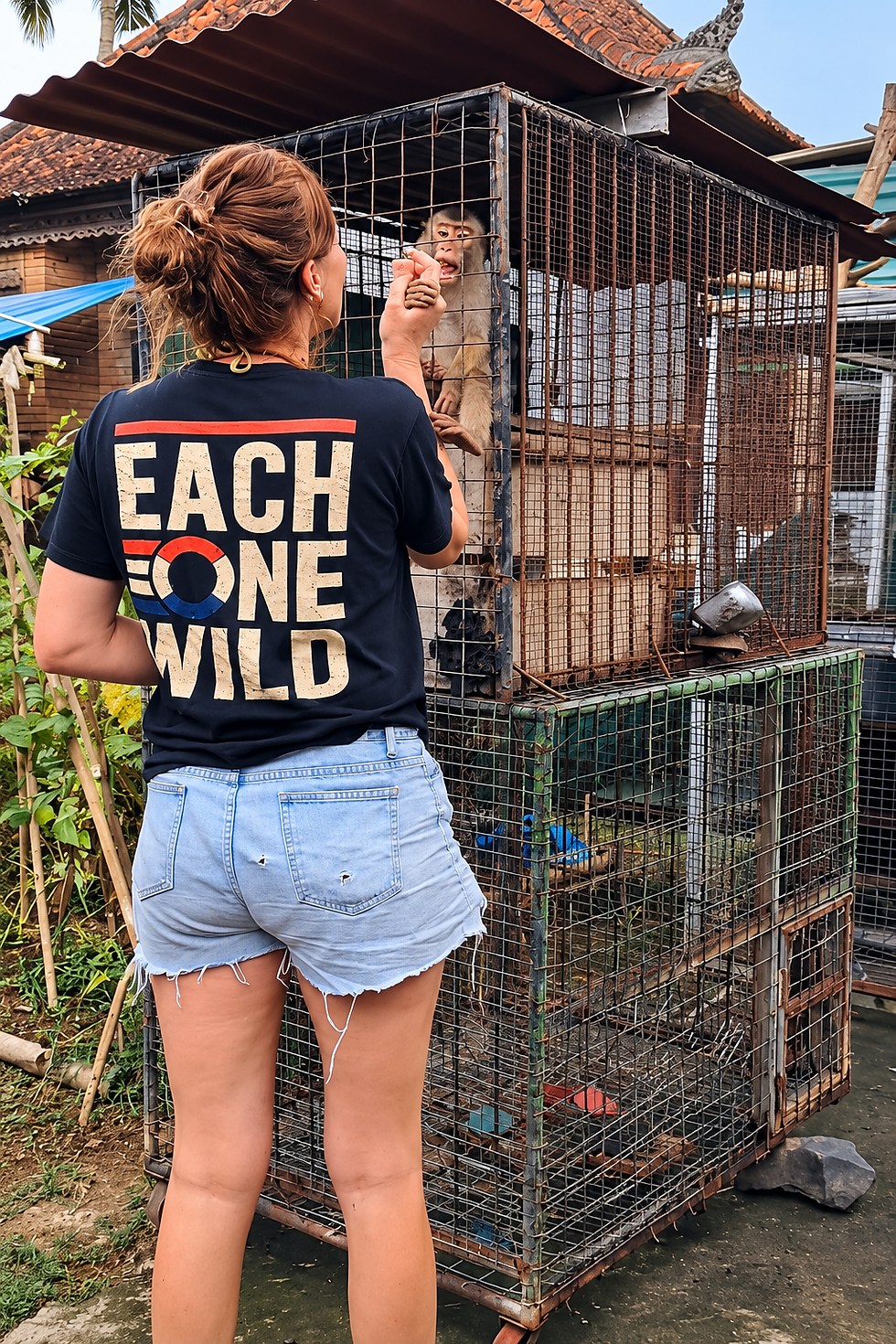
So I’ll start this blog by admitting something – most of the monkeys I’ve worked with have actually been inside enclosures. So they haven’t had the chance to steal quite as much as they probably would like to!
But… having lived in Bali and Lombok for 18 months, I completely understand why people see long-tailed macaques as highly skilled pickpockets.
Is this behaviour specific to this species? That I can’t say for certain. But I do think it’s likely. And here’s why.
They’ve adapted to live alongside humans
One huge thing that sets Bali’s long-tailed macaques apart from many other primates in Indonesia is their ability to live in urban environments.
While other species tend to stay deep in forests or jungles, macaques have adapted—over decades, if not centuries—to living alongside humans.
And when you consider just how massive tourism in Bali has become over the last 30 years, this starts to make even more sense.
As Bali has developed, forests have been cleared to make way for villas, hotels, and tourist hotspots. That means:
less natural food
less space
more human interaction
So naturally, their instinct to find food becomes stronger—and more creative.
They’re not afraid of us
Unlike a lot of wild animals, macaques don’t have that same built-in fear of humans.
From my experience, they’re:
confident
dominant
strong
and sometimes… a bit fierce
They’re not afraid to challenge:
other macaques
dogs
cows
or humans
And honestly… I kind of love that about them. They’re like little warriors.
They’re incredibly intelligent (more than people realise)
Macaques are very, very good problem solvers.
I know a lot of research focuses on great apes when it comes to higher cognition—but I’ve seen things first-hand that suggest macaques are far more capable than they’re often given credit for.
I’ve watched them:
plan how to get food
manipulate situations
learn from outcomes
and adapt their behaviour quickly
Combine that intelligence with survival instinct… and you’ve got a pretty powerful mix.
They’re curious… like really curious
Macaques are extremely curious animals.
They want to:
touch everything
smell everything
taste everything
understand everything
If they see something new—like sunglasses or a phone—they’re going to grab it. Not necessarily to “steal” in the way we think of it, but because they want to explore it.
It’s not that different from a toddler, really.
The only difference is:👉 macaques have sharp teeth and serious strength
So when they act impulsively, it can feel a lot more intense.
And this is where the “stealing” behaviour really develops
Now let’s look at it from the macaque’s perspective.
Tourists—especially those not used to seeing monkeys—often find them cute and fascinating at first. So what happens?
They feed them.They interact with them.They react when something is taken.
And this is where macaques start to learn something very important:
"Some items are valuable to humans"
Phones. Sunglasses. Bags.
And more importantly:👉 humans will do almost anything to get them back
So what happens?
A macaque grabs an item. The human panics. Food is offered in exchange.
And just like that, the macaque learns:
“If I take this… I get something better”
From that point on, it’s a game.
And macaques are very, very good at learning the rules of that game.
So… why do monkeys in Bali steal things?
Because they’ve adapted.
They’ve adapted to:
living alongside humans
reduced natural resources
constant interaction with tourists
and a system where “stealing” often leads to reward
They’re not being “naughty”.
They’re being:
intelligent, curious, and incredibly effective survivors
A harder truth
When I look at the macaques we take in at BMR, many of them have lost this behaviour.
They’re:
more fearful
less confident
less curious
And honestly… that’s not a good thing.
Because that “fire”—that boldness, intelligence, and curiosity—is part of what makes them who they are.
Final thought
So the next time you see a monkey in Bali and think "why do monkeys in Bali steal things?" maybe after they have grabbed a pair of sunglasses or a phone…
It’s not random.
It’s not just mischief.
It’s the result of human impact, environmental change, and a species that has learned how to survive in a world we’ve reshaped around them.

Comments