

Support Primate Protection Through Sustainable Fashion Choices

Updated: Mar 16

The fashion industry isn’t something most of us immediately connect with wildlife conservation. But the reality is that what we choose to wear can have a surprisingly big impact on the natural world.
Fashion is one of the largest industries on the planet, and unfortunately it’s also one of the most damaging to the environment. From deforestation to pollution and massive carbon emissions, the way clothing is produced can affect ecosystems across the globe — including the forests that primates call home.
As consumers, we actually have more influence than we might think. The brands we choose to support shape the future of the industry.
And that’s exactly where sustainable fashion comes in.
How Fashion Affects Primate Habitats
Many of the materials used in clothing production come from regions that are also home to endangered wildlife. Tropical forests in Southeast Asia, Africa and South America — the same forests where many primate species live — are often cleared to produce raw materials or agricultural products used in global supply chains.
When forests disappear, wildlife disappears with them.
For primates like macaques, orangutans and countless other species, these forests are not just homes. They are food sources, social spaces and entire ecosystems that have evolved over thousands of years.
When those habitats are destroyed, survival becomes much harder.
Climate change also plays a role. The fashion industry contributes a significant amount of global carbon emissions, which in turn affects weather patterns, food availability and breeding cycles for wildlife around the world.
Why Sustainable Fashion Matters
Sustainable fashion is about producing clothing in a way that reduces harm to the environment and the communities involved in making it.
That might mean using better materials, producing clothing more responsibly, or simply creating products designed to last longer instead of being worn once and thrown away.
At its heart, sustainable fashion is really about respect — respect for the planet, the people who make our clothes, and the wildlife that shares this world with us.
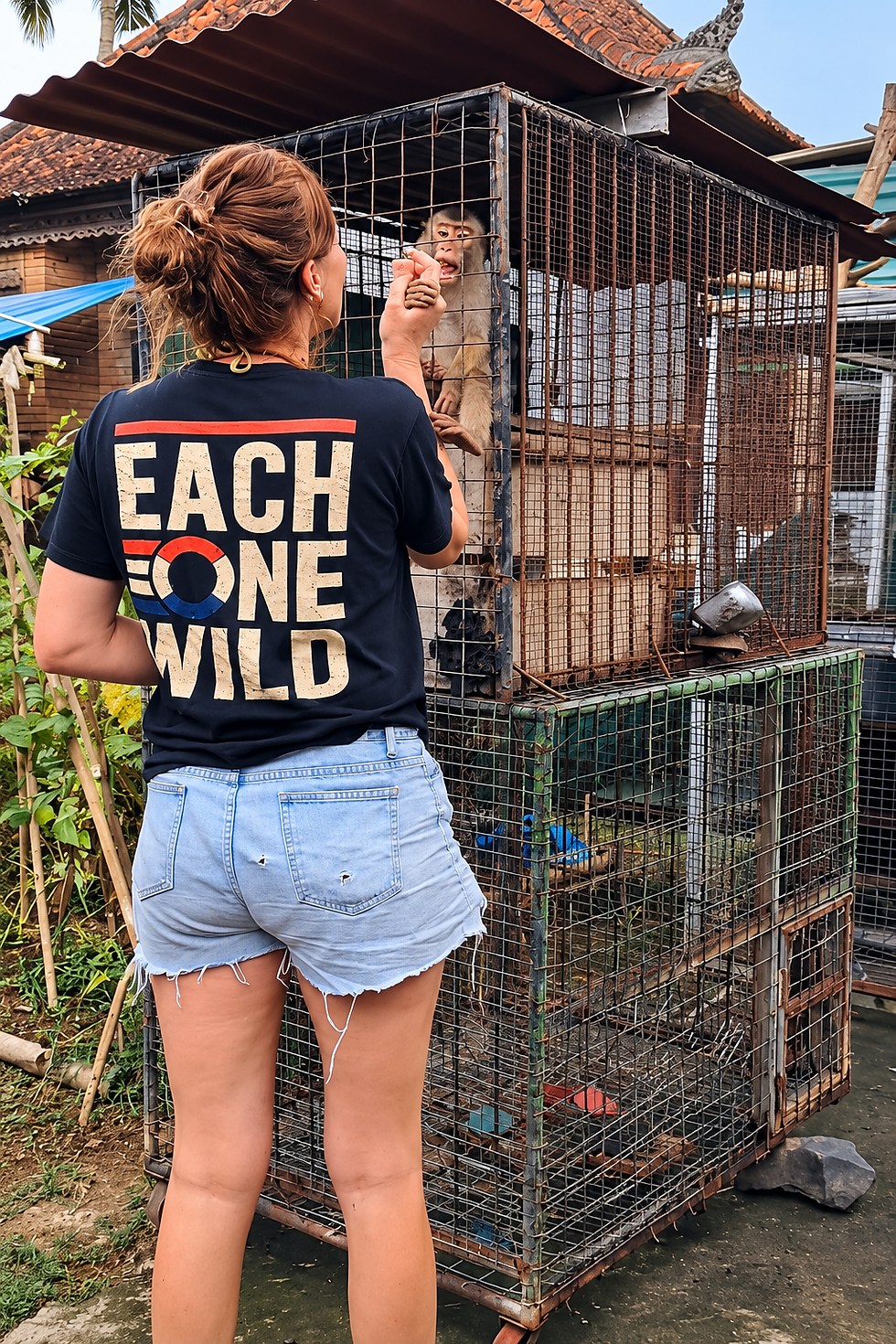
This philosophy is something that sits at the centre of Each One Wild.
The brand itself was born from time spent in Bali, where yoga, nature and working with primates became deeply intertwined parts of my life. Seeing first-hand how closely humans and wildlife are connected changed the way I think about everything — including the things we create and wear.
Small Choices That Make a Difference
The good news is that supporting a more sustainable fashion industry doesn’t have to be complicated.
A few small changes can make a real difference:
Choosing clothing made from more responsible materials
Supporting smaller independent brands with ethical values
Buying fewer, better quality items that last longer
Reusing or buying second-hand when possible
Every purchase is a vote for the kind of world we want to live in.
Fashion With a Purpose
At Each One Wild, the goal is simple: create clothing inspired by the wild places and animals that shaped this journey.
A portion of profits from the brand supports grassroots primate conservation organisations — the people working directly on the ground to protect monkeys and other primates who often receive very little global attention.
Because protecting wildlife isn’t something that happens in theory. It happens through real people, real projects, and real support.
A Future Where Style and Nature Coexist
Sustainable fashion isn’t about perfection. It’s about progress.
The more people who start thinking about where their clothes come from, the more the industry will shift toward better practices.
And if fashion can help raise awareness about wildlife along the way, even better.
Because ultimately the goal is simple:
To build a world where both humans and wildlife can thrive.
And sometimes, that change starts with something as simple as what we choose to wear.

Comments